Our Chairman Neil's visit to Number 10 Downing Street
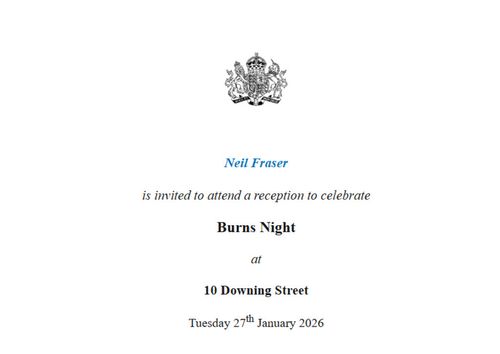
Perhaps it says a lot about the society and times we live in, but getting an email invite to a reception at 10 Downing Street has the initial feeling that it must be a hoax.
That’s exactly the position I found myself in January this year, an invite to a Burns Reception, addressed to me personally and sent to my email, with no stated reason for why I had been invited.
Whilst I would normally mark this as spam, there was something about it that raised niggling doubts – the email addresses looked genuine. So, with a little bit of detective work, it was soon confirmed that I had indeed been invited to a reception, the following week, at Number 10 Downing Street.
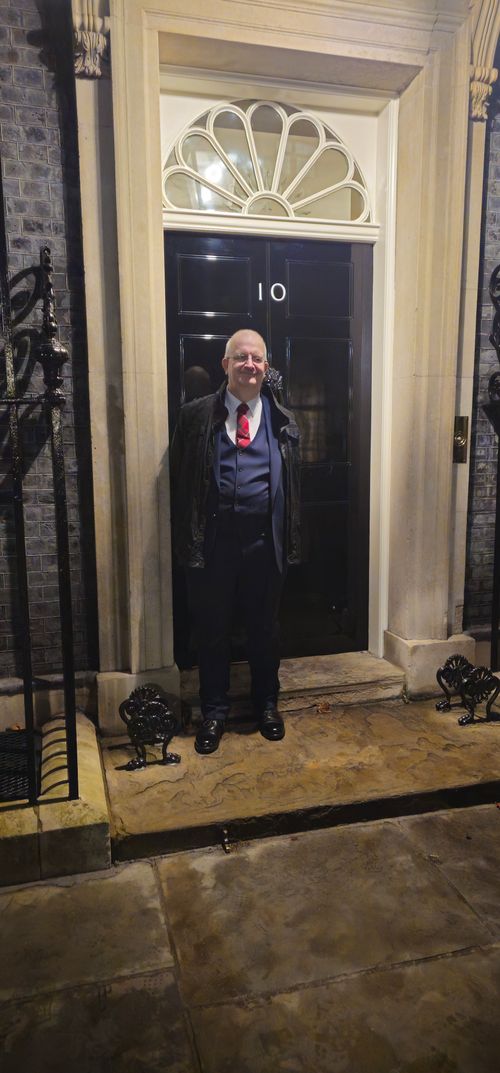
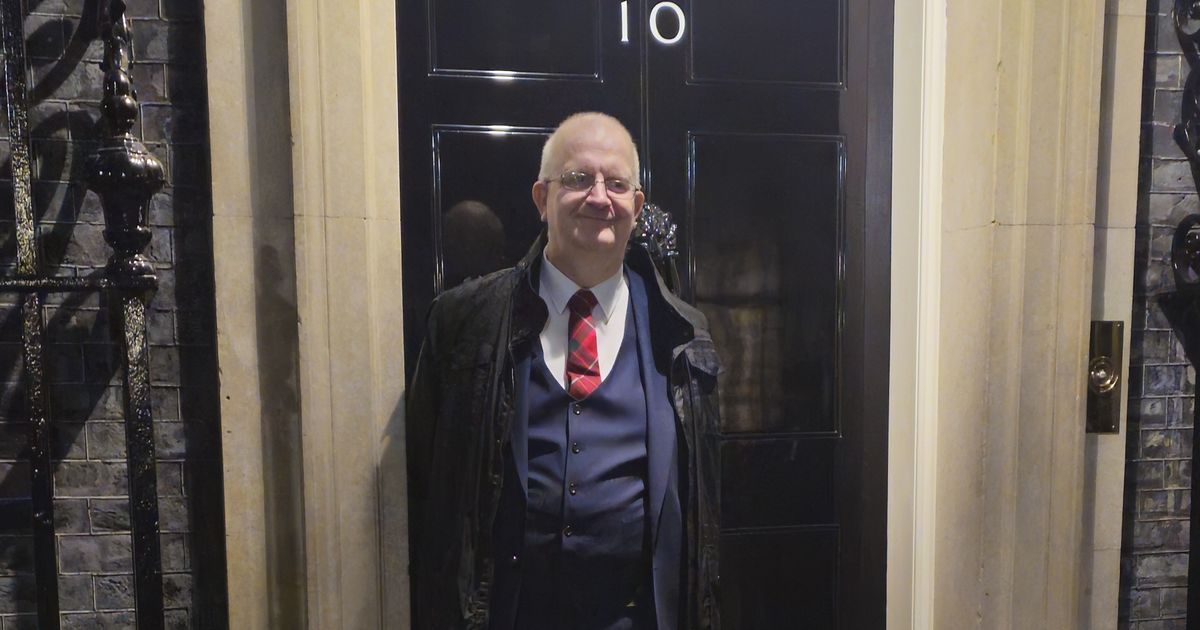
The last time I was close to the front door at number 10, I was 5 years old in the 1970s on a family holiday to London, and I have a photograph of me and my brother on the pavement outside the iconic black door – those were the days that you could do that.
The approach to get to the same spot this time, was somewhat different.
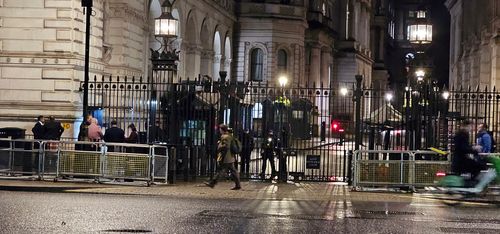
It all begins outside the gates on Whitehall. As I approached there was definitely a feel about Scotland, people wearing tartan, some in full highland dress could be seen queing at the gate. At exactly half past 6 we began to have our identities checked and allowed one by one to pass through the security scanner in the same way as going through an airport, suddenly you are very aware that you’re not just visiting a building, you are stepping into a secure workplace that sits at the centre of government. From then it was a very short walk to the front door at number 10 a solo piper from the Edinburgh Military Tattoo playing us in.
That famous black door. It’s smaller than people expect, but it has presence. The glossy finish, the fanlight above it, the lion-head knocker, and that brass letterbox with the words “First Lord of the Treasury”.
The door is normally closed, you gain entrance by having the door opened from the inside, where one of the first things you encounter is the entrance hall: the black-and-white floor, the sense of ceremony without outright luxury. Other than the security cameras and screens, nothing even hints at being modern. Before you even check in your coat, your mobile phone must be left, not in secure locked boxes but in a large free standing mahogany rack.
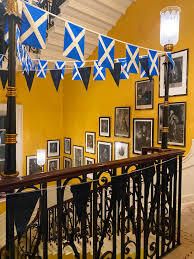
That night, the staircase was festooned with saltires and tartan. At the foot of the stairs highland dancers from the Edinburgh military tattoo entertained the guests as they made their way upstairs, but this staircase is not just a way to get to the next floor. It’s a corridor of political memory. The walls are lined with portraits, photographs and the signatures of all the Prime Ministers, marching through time as you climb, with the most recent faces at the top. and yes its also dificult not to think of Hugh Grant in the iconic scene in the movie “Love Actually”.
And then there are the rooms that you recognise from television, but which feel somewhat different in person.
What stays with you is not only history (and that is everywhere) but also the contrast. A building that began as an ordinary terrace house, built fast and cheaply, has become one of the most scrutinised workplaces on earth. Up close, it doesn’t feel like a fortress. It feels like a house with a very heavy job.
On this occasion, we were entertained in the state rooms, about 100 guests of the government mostly charities in Scotland or for the benefits of Scots in London brought together tonight to celebrate our national bard Robert Burns.
The pillared room is the largest of the state rooms and the focus of tonights celebration. Historically, this room was used by Lord Palmerston and William Gladstone as a Cabinet Room. In 1930, John Logie Baird demonstrated the ‘wondrous miracle’ of television to Ramsay MacDonald in this room. On display are the torch and medals presented at the most recent London Olympic games as well as Pitt the Youngers writing desk.
Although a number of politicians were to be there, they had to leave for a late vote in Parliament but we were greeted by the Secretary of State for Scotland The Rt Hon Douglas Alexander and had a brief visit from the Prime Minister, the night before he set off for his visit to China.
Music was provided by students of the Royal Conservetoire of Scotland and various poems of the Bard performed throughout the evening.
From the minute a champagne glass was offered as you entered the state rooms it was never allowed to get more than half empty. Whisky representatives were there making “powerful” Whisky cocktails and Scottish canapes of haggis and smoked salmon were constantly being offered. For desert, chocolate cups with cream adorened with Scottish Raspberries, finished the evening nicely.
The night was not only a celebartion of Burns but also a chance for charities and performers to mingle and talk amonst themselves, making contacts, sharing a unique experience that
none of the people I talked to ever imagined being part of or, like me actually knew the reason we were there.
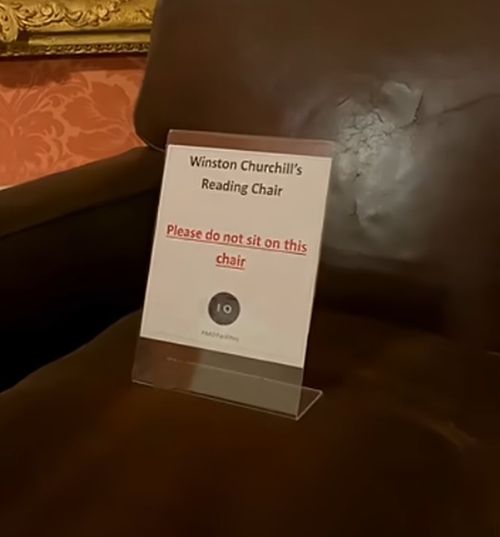
As we left, passing by Winston Churchills favourite reading chair and the Duke of Wellingtons travel case, you step back out through that black door, and then you realise: you haven’t just visited an address you have seen history.
As for why I was there? I still haven’t officially found out, however, in November last year, the charity I am the current Chairman of, Grampian Hospital Radio, received the Kings Award for Voluntary Services. A prestigious award presented by the King, recognising in part the 45 years of broadcasting to the patients of the hospitals in Aberdeen. I, myself having been a member for 40 of those years. That night amongst other charities there, were some other Kings Award recipients, so we’ll just put it down to that.